Sprinting to an AI product vision... before ChatGPT
Client
Redacted as Requested
Timeline
Jan - Mar 2022
Role
Product Designer
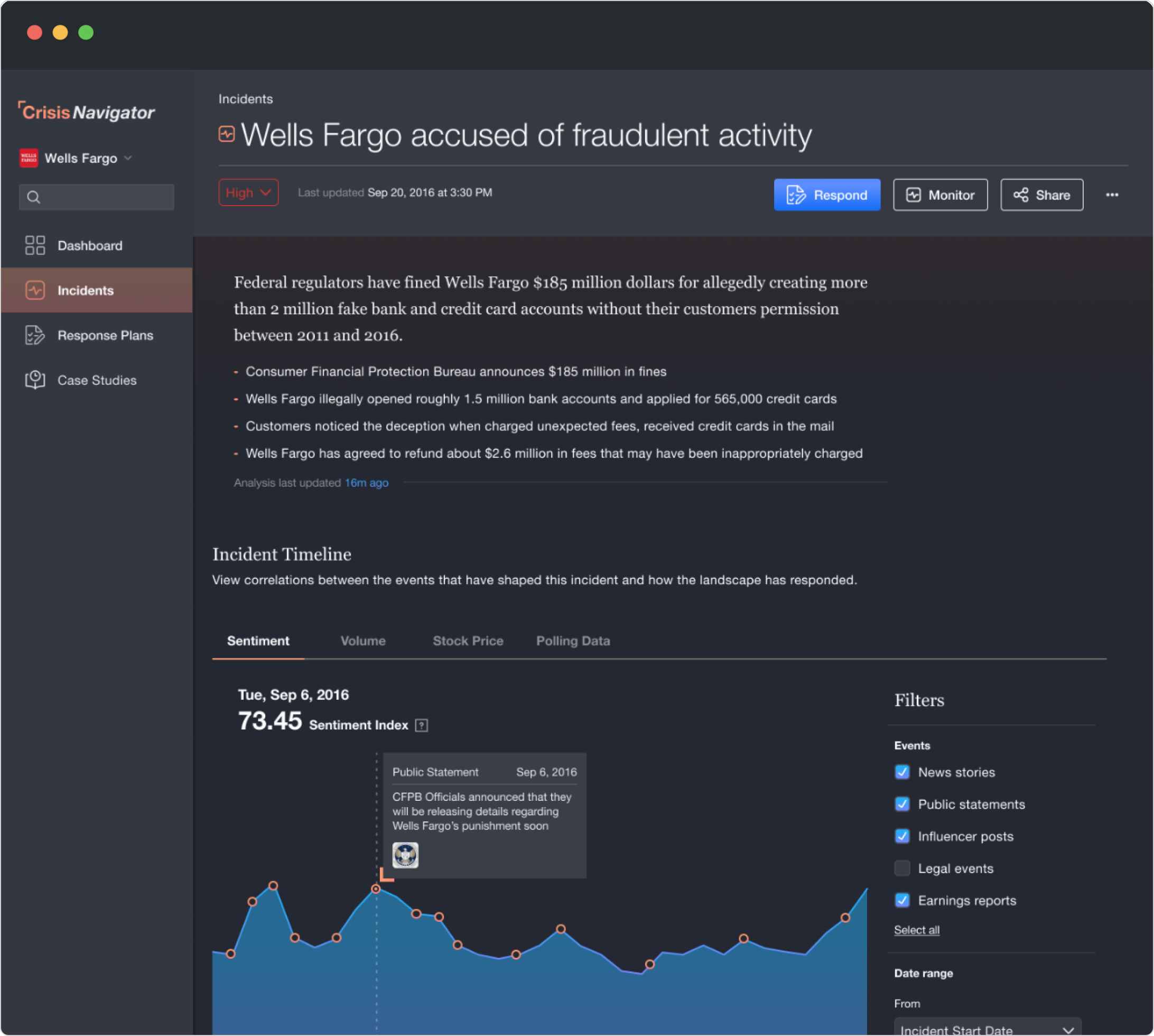
A PR firm engaged us to reimagine reputation & crisis management
The client’s thesis was based on the likely emergence of generative AI as a disruptive force in technology, pre-ChatGPT. In eight weeks I went from leading a design sprint workshop to delivering a polished, innovative prototype that reimagined what tools in this space can deliver.

Project Goals
1
Facilitate a design sprint workshop to help our client partners focus and clarify their vision
Deliver a prototype that demonstrates an end-to-end crisis communication & management workflow
2
Sprint Workshop
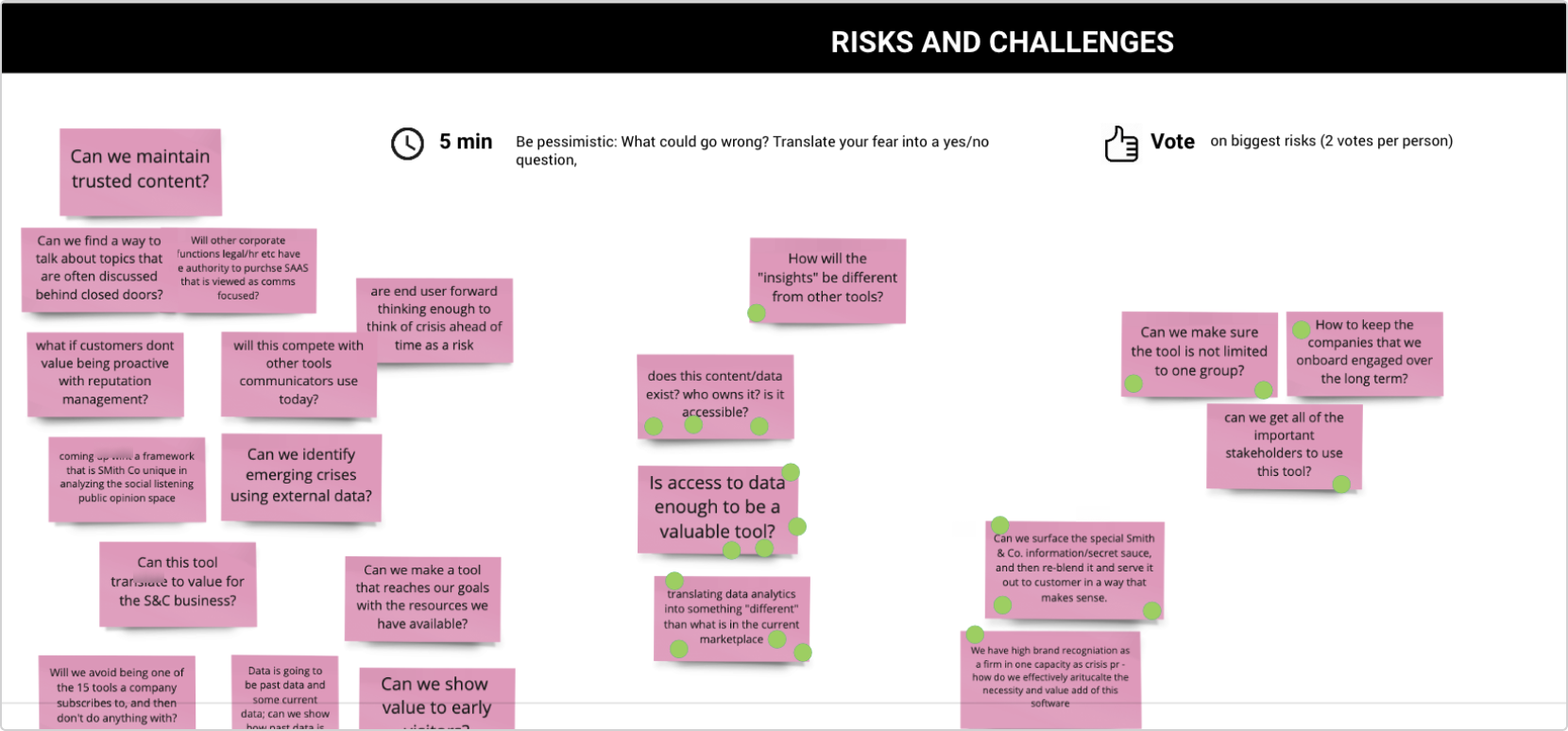
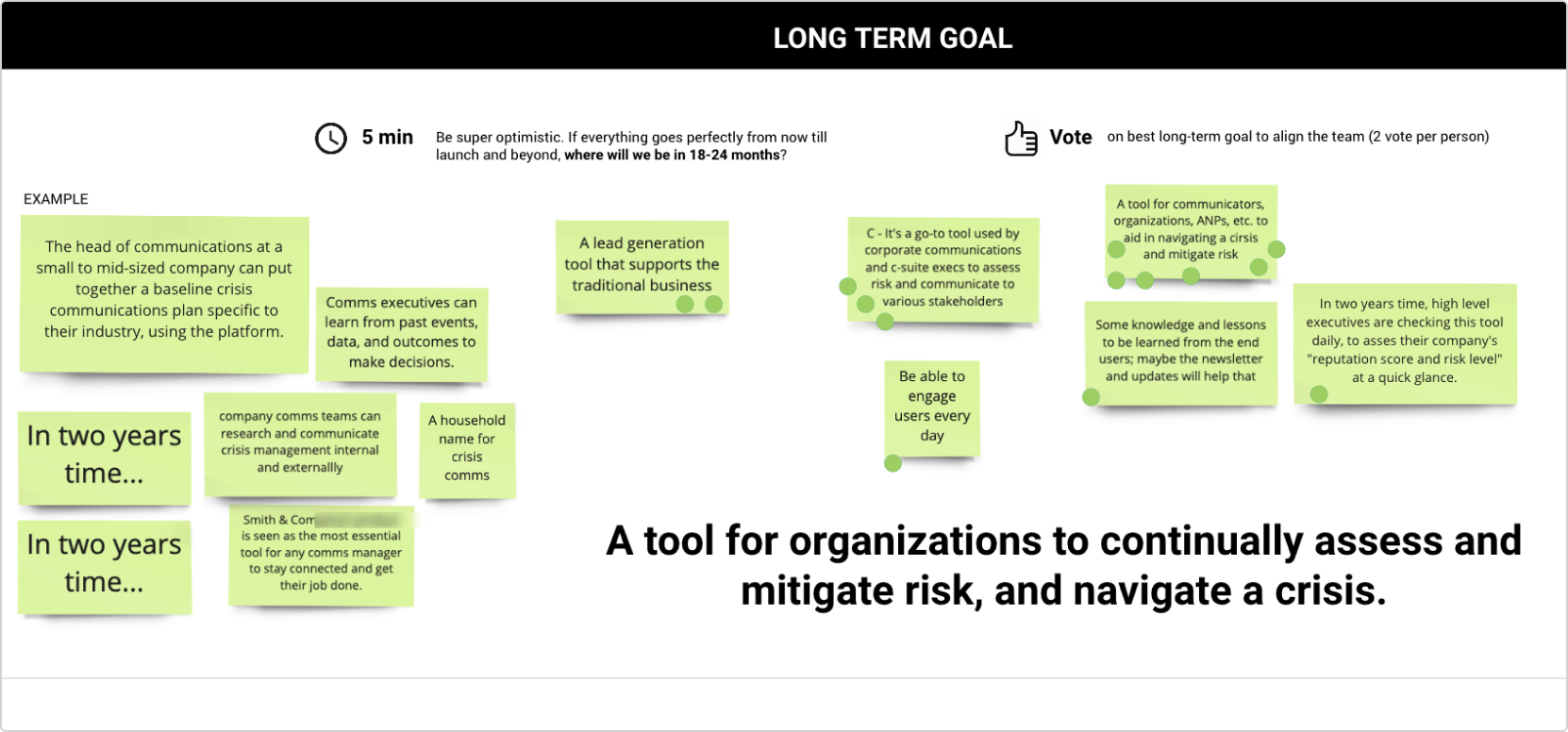
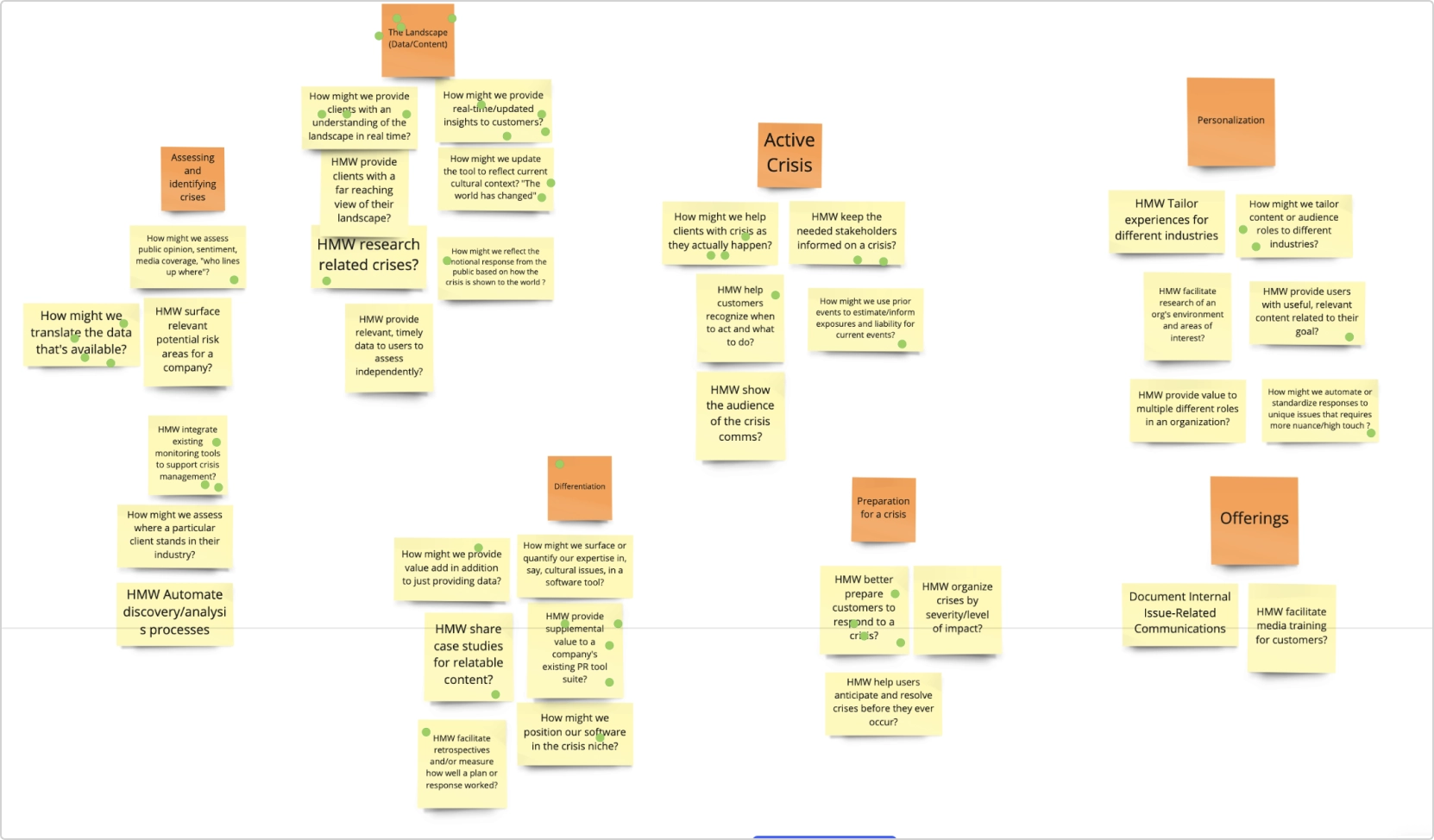
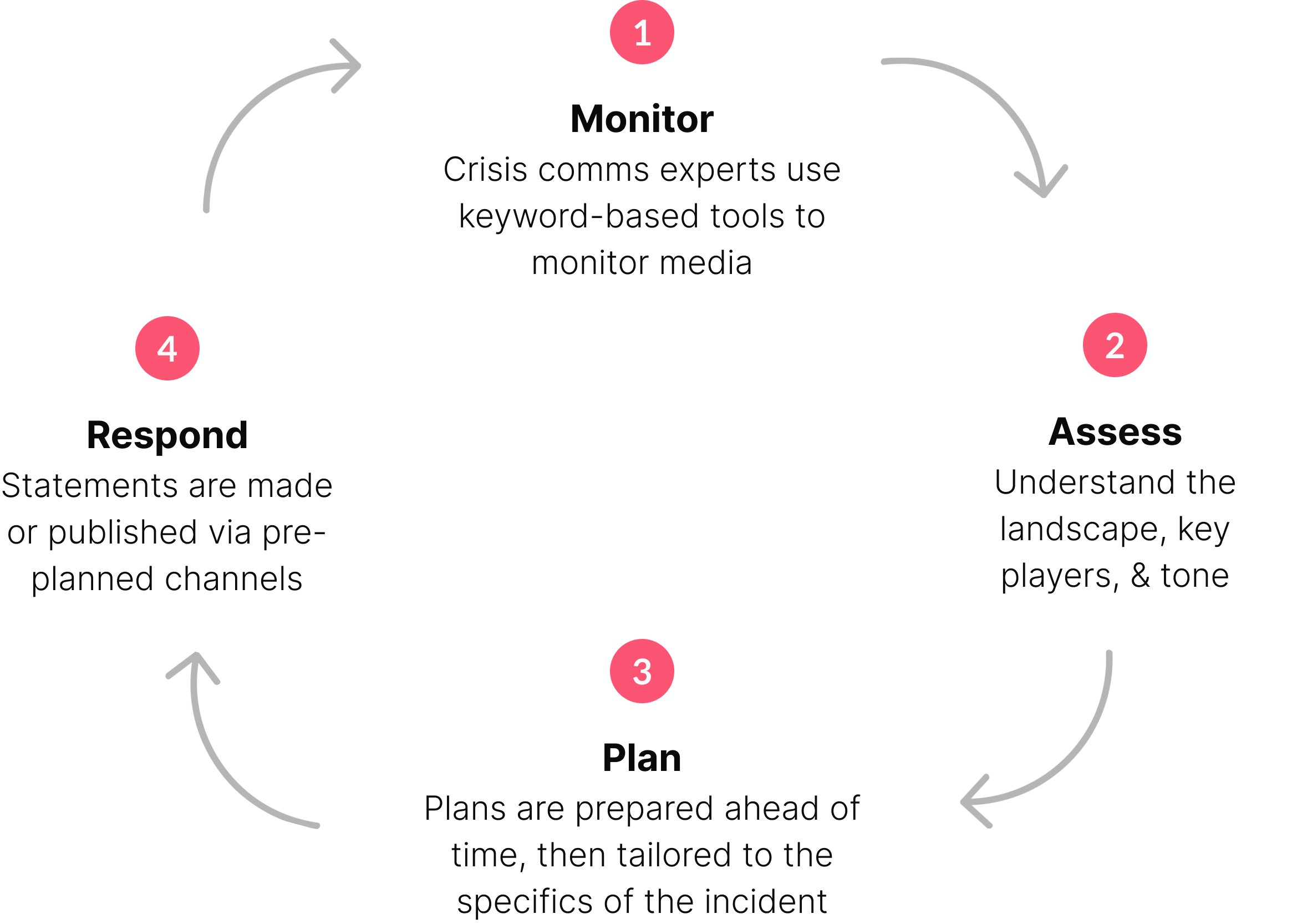
We led a design sprint workshop to help our client partners focus their vision into a product concept. It also served to deepen our understanding of the domain, the customer, and the competitive landscape.
The Target Audience
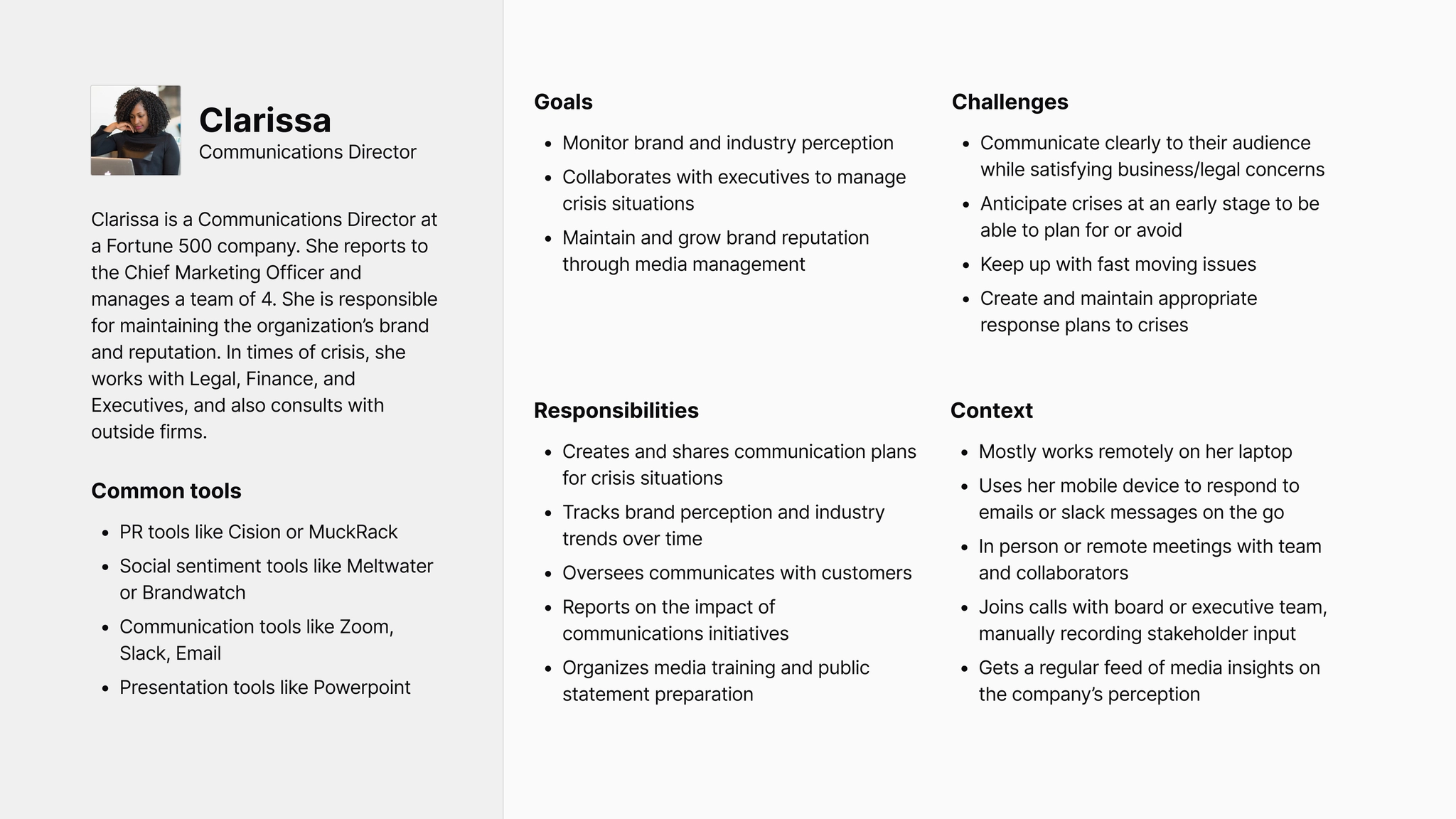
The ideal customers we would target with this product are people with leadership positions in Fortune 500 Communications verticals. We researched their tooling, behaviors, ambitions, and pain points to help inform what a valuable tool would look like for them.
The Competitive Landscape
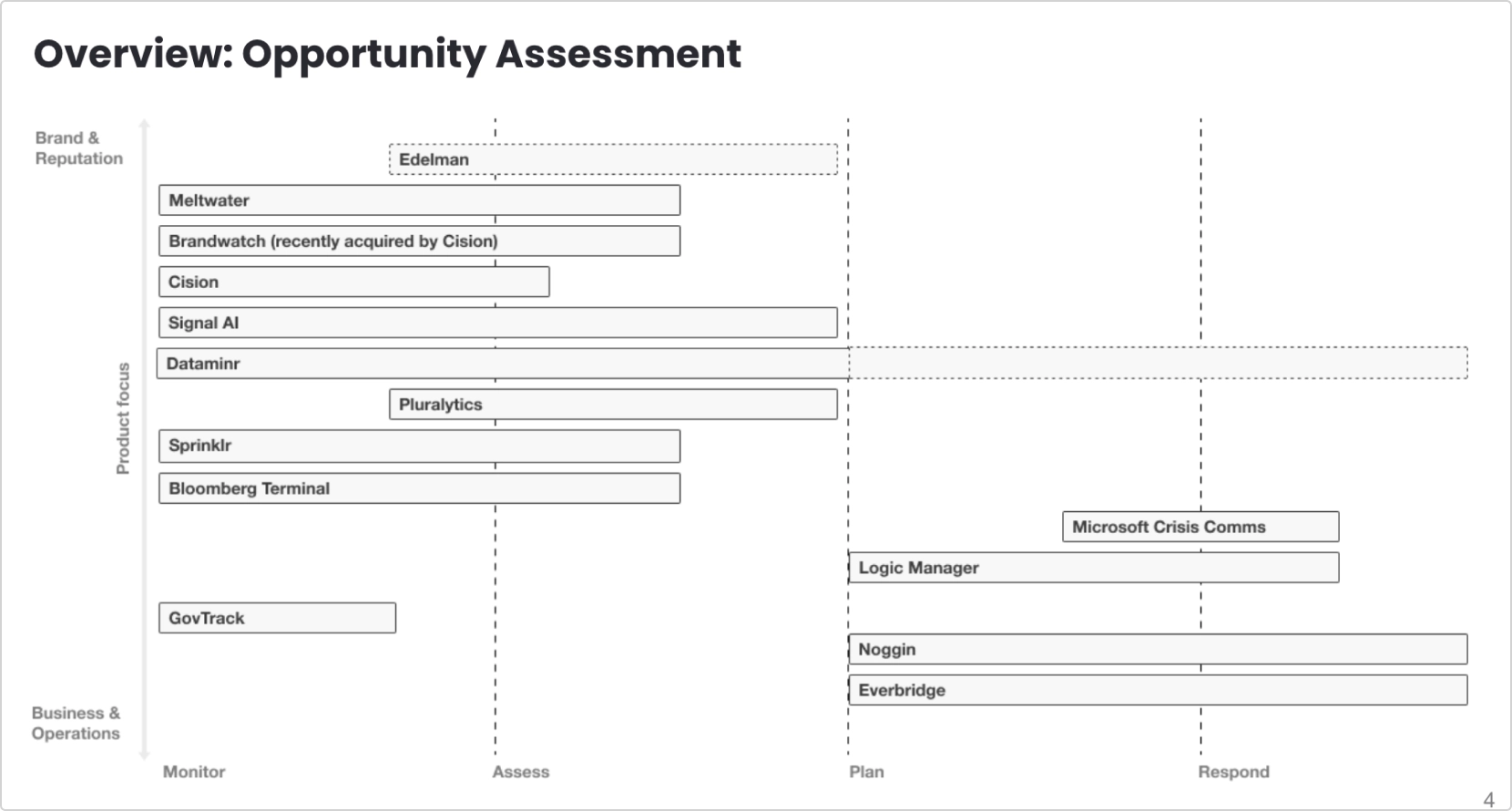
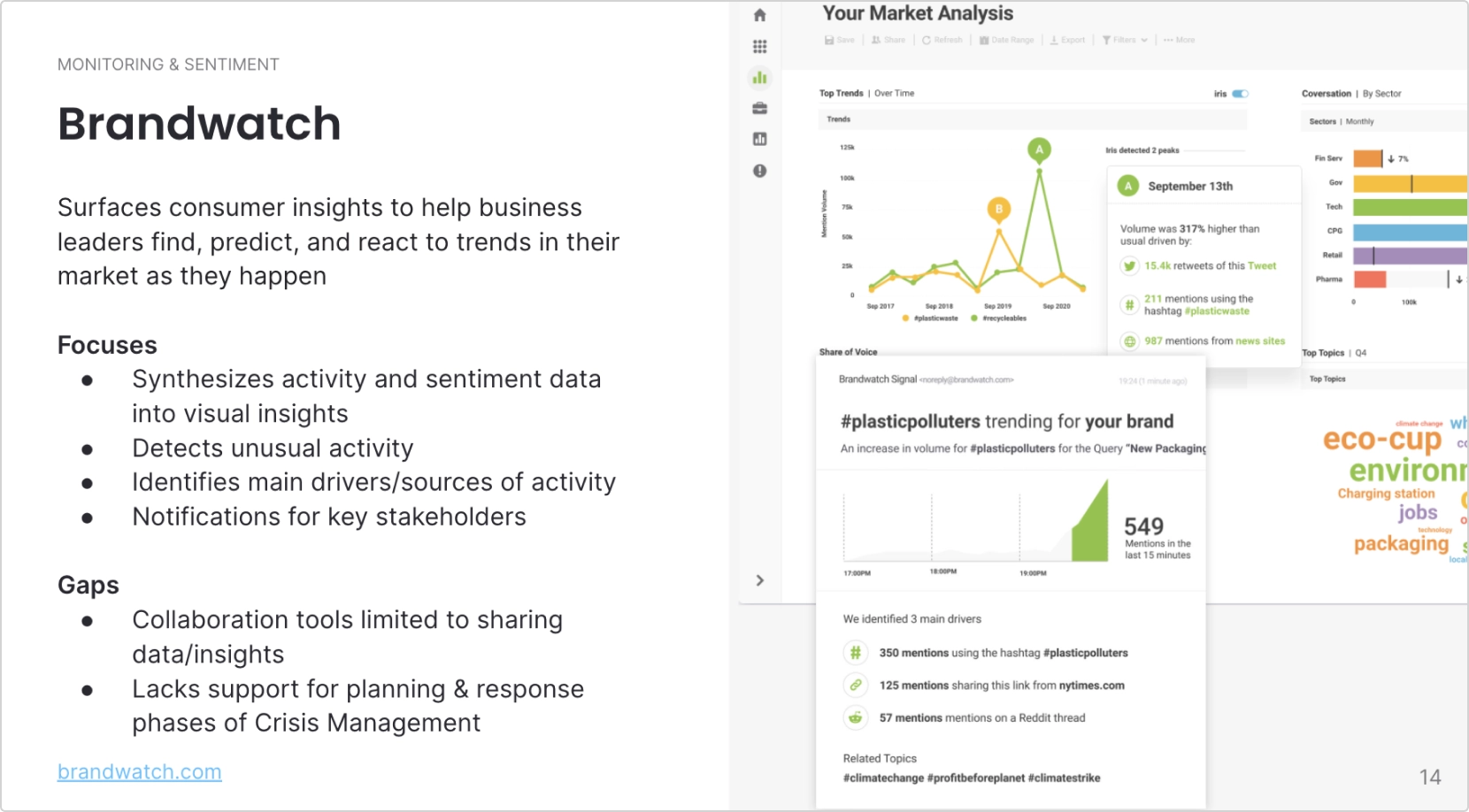
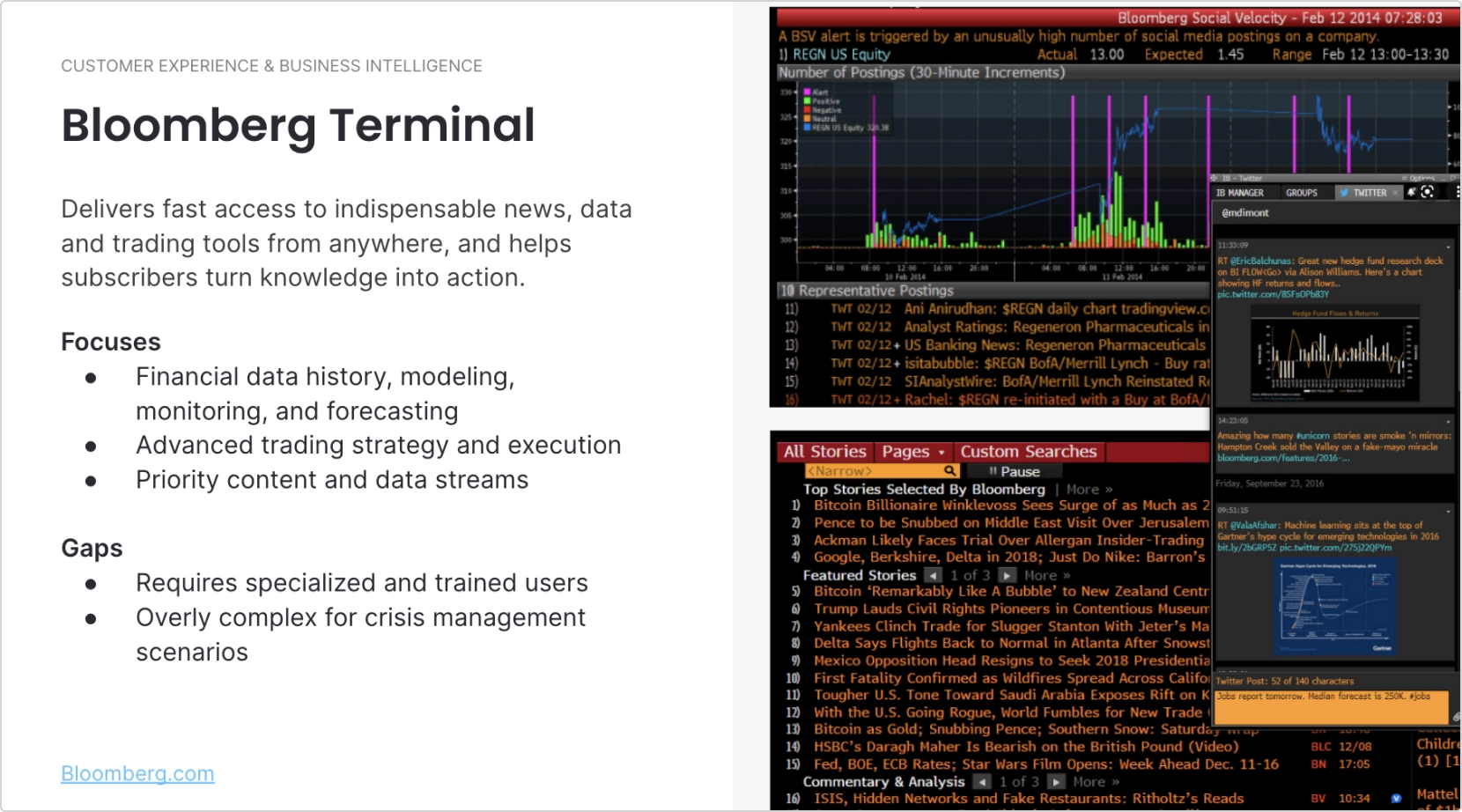
We supplemented our sprint activities with research into the tools that exist today. We identified opportunities for differentiation, and areas of market saturation.
Key Takeaways
- The monitoring space was crowdedFrom the competitors we evaluated, 70% offered monitoring tools
- The biggest gap: planning & response toolingThe later stages of the crisis response lifecycle were less represented among competitors - only one offered solutions in this space
- AI-powered monitoring, including predictive analyses, were table stakesWhile valuable, these features were less of a differentiator than initially hypothesized
- Competitor solutions lacked a human touchWhat little content exists in these experiences felt generic, with no expert-backed or opinionated point of view
- Acquisitions were rapidly changing the landscapeLongstanding players were looking to expand their capabilities. Ex: Cision acquired Brandwatch, Dataminr acquired Krizo.
Design Iterations & Solution
Conceptualizing a new type of tool
Our workshop concluded with a low-fidelity prototype that demonstrated how this tool could support some of the key moments in the user journey we identified.
Iterations
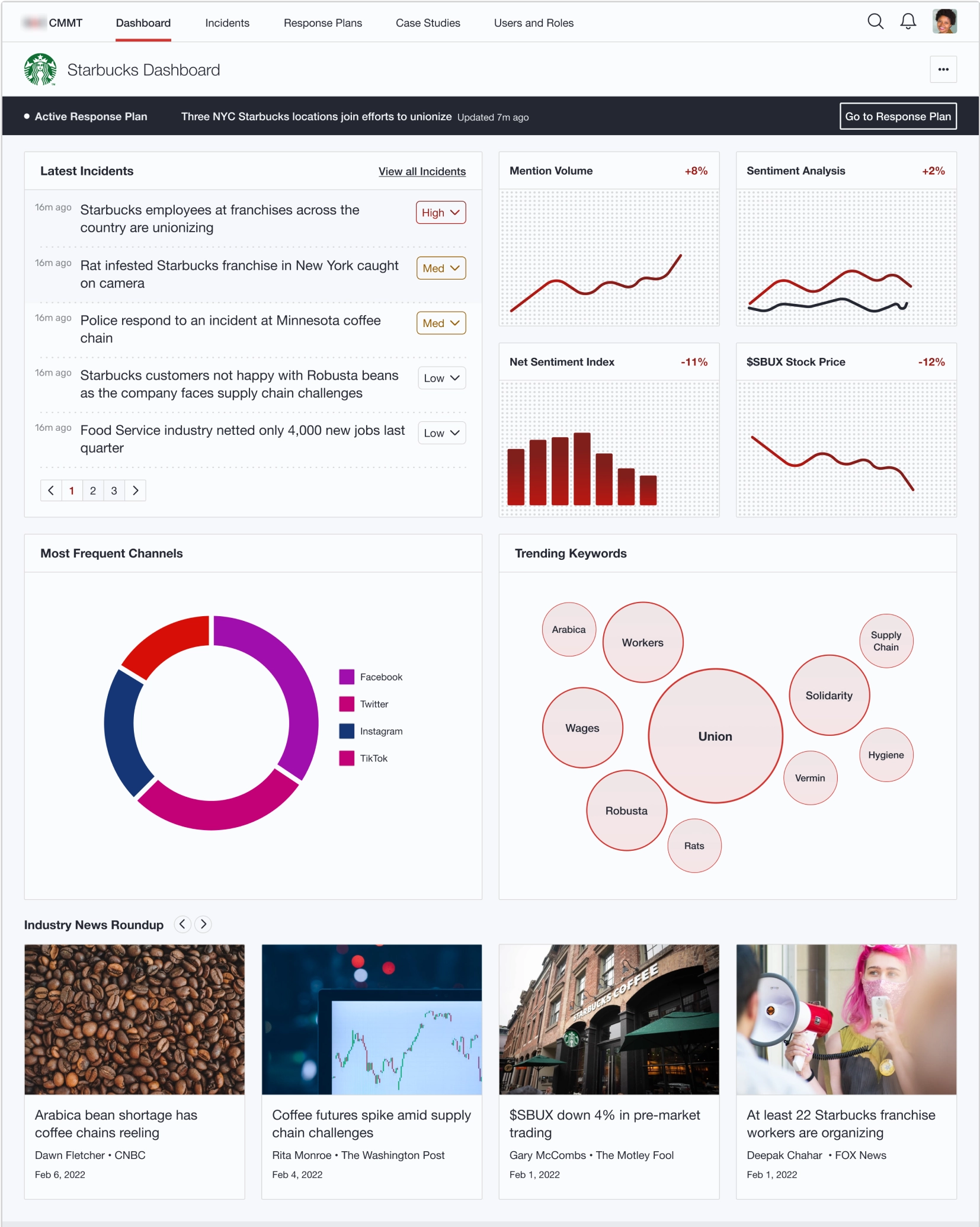
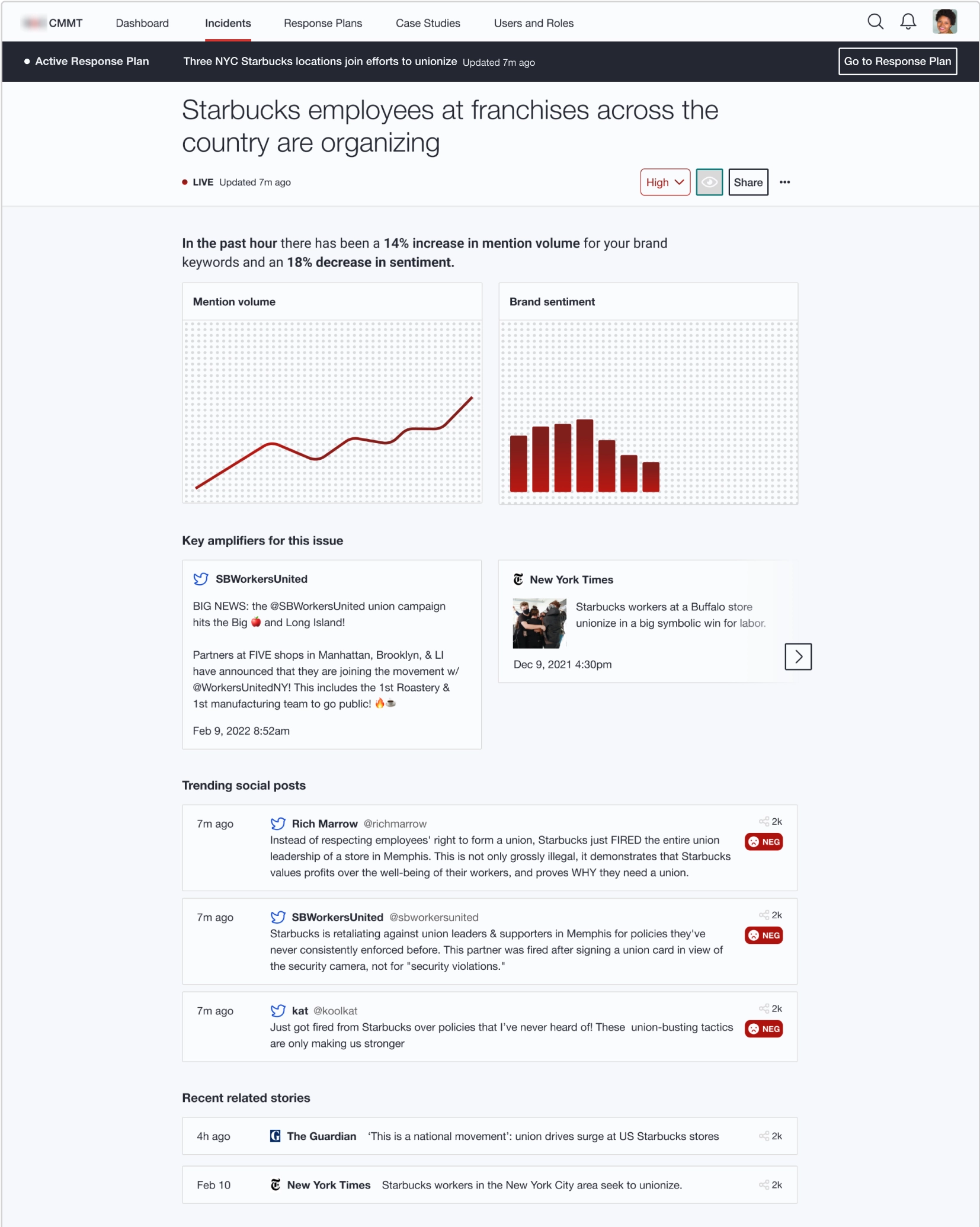
We worked to refine the journey, and the supporting user experience. We also identified the need for a dashboard view to support the monitoring phase, and sought to include valuable data visualizations of key insights.
Dashboard
Incident Details
Final Prototype
Monitoring the media landscape
To support the monitoring phase of crisis management, I designed a dashboard view for users to reference key metrics and drill in to learn more about specific incidents that are relevant to them.
High-fidelity dashboard
Incident assessment
Information travels faster than ever, and users must be able to thoroughly assess a developing incident in order to decide if, when, and how to respond.
Incident timeline feature on the incident page
Crisis Response
Visualizing cause & effect
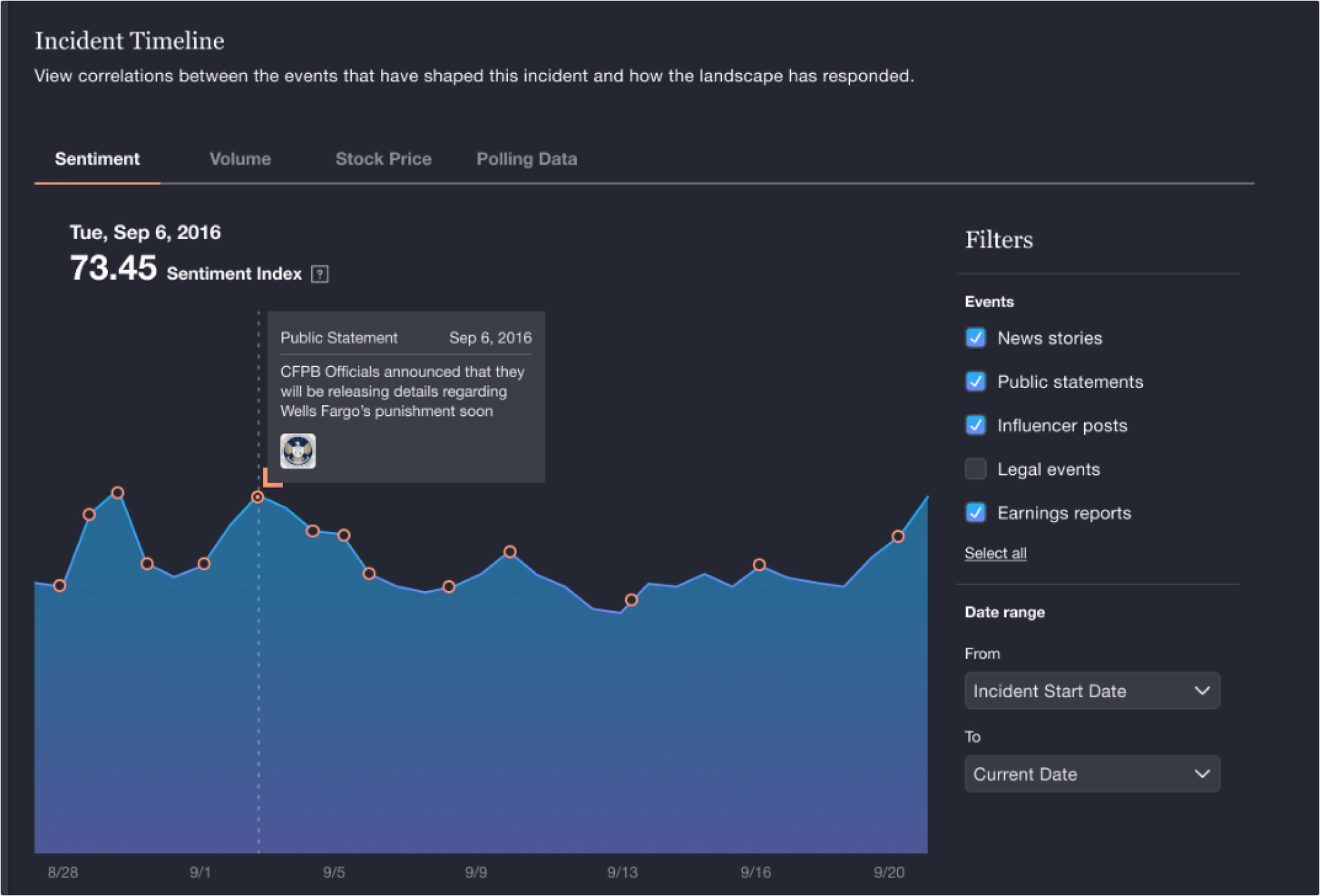
One job of the incident page is to help users understand how audiences are reacting, or being impacted, by a given incident. I designed a timeline view as a way to chart the events that make up an incident against important metrics like stock price, audience sentiment, or mention volume.
Incident timeline feature on the incident page
Intelligence Layer
Contextual AI Insights
We also designed a contextual module that would surface when the user engaged with certain information. By offering hyper-targeted intelligent recommendations, and surfacing the ability to request a consultation, we demonstrated how the client could productize their knowledge, while still driving users to their traditional consulting services.


S&C Insights
Fraud is a serious issue. Avoid overcommuication and defensive claims.
Your team should be clearly in sync for the allegations, responsibilities your company your has, and the actions you will take to address it.

Companies found guilty of fraud often have several years of lowered growth

20%
70%
2010
2015
2022
A.I. Generated using Federal Labor Bureau and NLRB Data
Need to go deeper?
Request Consult

Incident timeline feature on the incident page
A collaborative crisis command center
We were inspired by project management tools like Asana that help users manage work in real-time. Users can review pertinent facts, align on goals & risks, and collaborate to draft responses.
High-fidelity response plan page
AI-assisted statement drafting
AI-assisted statement drafting
We were also inspired by tools like Grammarly that use AI to support better written work. We designed a collaborative drafting tool that could also provide recommendations for a more effective statement.
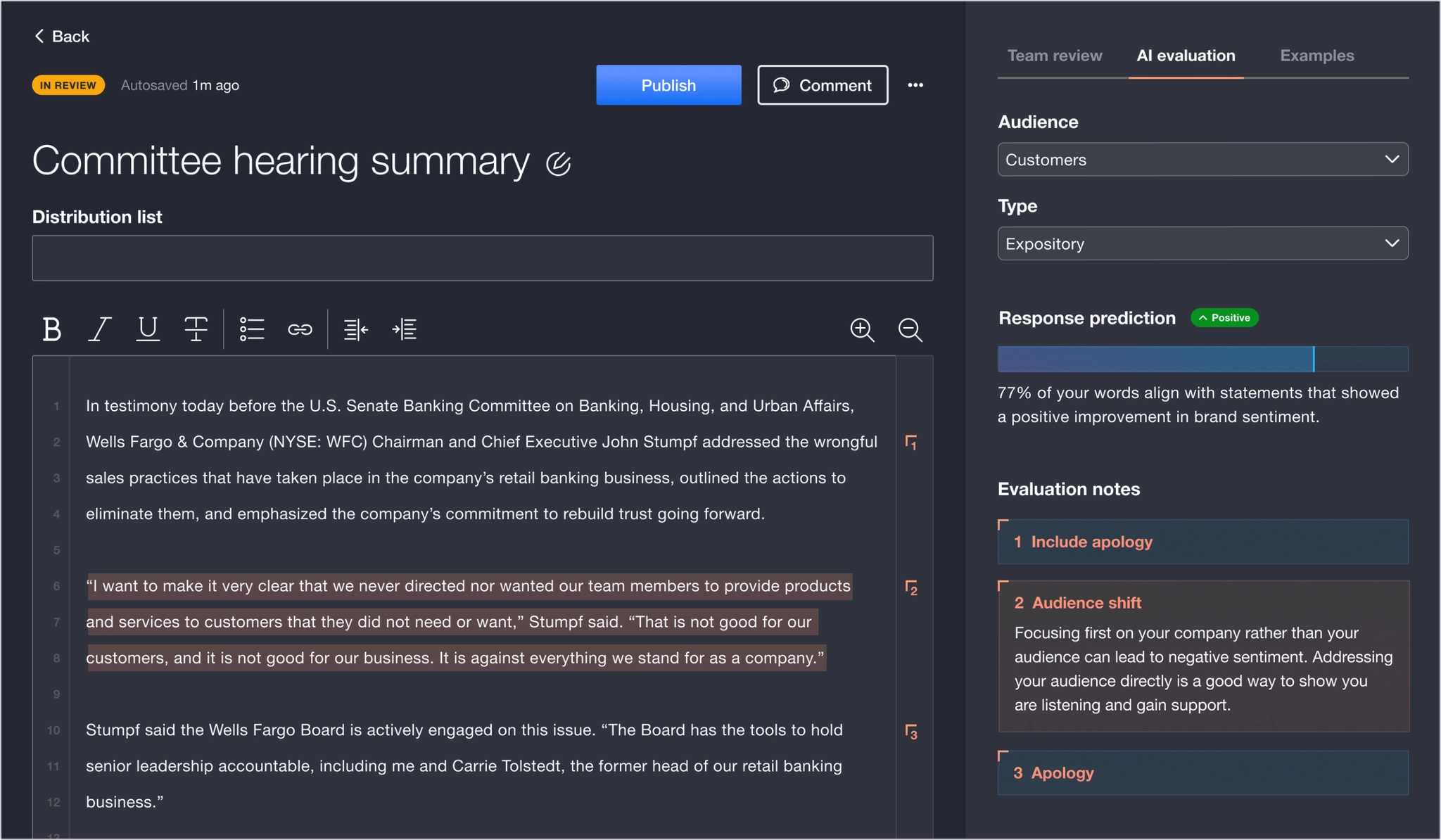
Statement drafting with AI natural language processing capabilities
Challenges & Next Steps
Every project has its constraints, challenges, and missed opportunities. While the work was well-received by our client partners, here are a few things I wish had gone differently.
- Engineering feasibilityOur time constraints on this project meant we were not able to thoroughly vet & scope our proposed features from an engineering lens.
- A more focused MVPSupporting the entire crisis management lifecycle in this solution would be a massive development effort. The first iterations of this tool should focus on the plan & response phases.
- The Chatbot GapWe designed this feature pre-ChatGPT, and didn’t explore chat as a core pattern. Today, we’d revisit with conversational UX and agentic workflows.
Measuring Success
Our goal was to deliver a prototype that would serve as a tool for fundraising and validation with prospective users, and a north star for product strategy. When considering the health & direction of the product in the future, these are the metrics that would be important to track.
- Incident RetentionAre customers returning after multiple incidents? The goal is to deliver enough value that they don’t revert to older tools or workflows.
- AI Response QualityAre users finding the AI outputs helpful and trustworthy? Where can we improve so the AI feels like an asset in high-stakes moments?
- Team ActivationAre multiple teammates actively collaborating in the product? Does it become the hub for crisis management rather than a side tool?

Sprinting to an AI product vision... before ChatGPT
Client
Redacted as Requested
Timeline
Jan - Mar 2022
Role
Product Designer
A PR firm engaged us to reimagine reputation & crisis management
The client’s thesis was based on the likely emergence of generative AI as a disruptive force in technology, pre-ChatGPT. In eight weeks I went from leading a design sprint workshop to delivering a polished, innovative prototype that reimagined what tools in this space can deliver.
Project Goals
1
Facilitate a design sprint workshop to help our client partners focus and clarify their vision
Deliver a prototype that demonstrates an end-to-end crisis communication & management workflow
2
Sprint Workshop
We led a design sprint workshop to help our client partners focus their vision into a product concept. It also served to deepen our understanding of the domain, the customer, and the competitive landscape.
The Target Audience
The ideal customers we would target with this product are people with leadership positions in Fortune 500 Communications verticals. We researched their tooling, behaviors, ambitions, and pain points to help inform what a valuable tool would look like for them.
The Competitive Landscape
We supplemented our sprint activities with research into the tools that exist today. We identified opportunities for differentiation, and areas of market saturation.
Key Takeaways
- The monitoring space was crowdedFrom the competitors we evaluated, 70% offered monitoring tools
- The biggest gap: planning & response toolingThe later stages of the crisis response lifecycle were less represented among competitors - only one offered solutions in this space
- AI-powered monitoring, including predictive analyses, were table stakesWhile valuable, these features were less of a differentiator than initially hypothesized
- Competitor solutions lacked a human touchWhat little content exists in these experiences felt generic, with no expert-backed or opinionated point of view
- Acquisitions were rapidly changing the landscapeLongstanding players were looking to expand their capabilities. Ex: Cision acquired Brandwatch, Dataminr acquired Krizo.
Design Iterations & Solution
Conceptualizing a new type of tool
Our workshop concluded with a low-fidelity prototype that demonstrated how this tool could support some of the key moments in the user journey we identified.
Iterations
We worked to refine the journey, and the supporting user experience. We also identified the need for a dashboard view to support the monitoring phase, and sought to include valuable data visualizations of key insights.
Dashboard
Incident Details
Final Prototype
Monitoring the media landscape
To support the monitoring phase of crisis management, I designed a dashboard view for users to reference key metrics and drill in to learn more about specific incidents that are relevant to them.
High-fidelity dashboard
Incident assessment
Information travels faster than ever, and users must be able to thoroughly assess a developing incident in order to decide if, when, and how to respond.
Incident timeline feature on the incident page
Crisis Response
Visualizing cause & effect
One job of the incident page is to help users understand how audiences are reacting, or being impacted, by a given incident. I designed a timeline view as a way to chart the events that make up an incident against important metrics like stock price, audience sentiment, or mention volume.
Incident timeline feature on the incident page
Intelligence Layer
Contextual AI Insights
We also designed a contextual module that would surface when the user engaged with certain information. By offering hyper-targeted intelligent recommendations, and surfacing the ability to request a consultation, we demonstrated how the client could productize their knowledge, while still driving users to their traditional consulting services.


S&C Insights
Fraud is a serious issue. Avoid overcommuication and defensive claims.
Your team should be clearly in sync for the allegations, responsibilities your company your has, and the actions you will take to address it.

Companies found guilty of fraud often have several years of lowered growth

20%
70%
2010
2015
2022
A.I. Generated using Federal Labor Bureau and NLRB Data
Need to go deeper?
Request Consult

Incident timeline feature on the incident page
A collaborative crisis command center
We were inspired by project management tools like Asana that help users manage work in real-time. Users can review pertinent facts, align on goals & risks, and collaborate to draft responses.
High-fidelity response plan page
AI-assisted statement drafting
AI-assisted statement drafting
We were also inspired by tools like Grammarly that use AI to support better written work. We designed a collaborative drafting tool that could also provide recommendations for a more effective statement.
Statement drafting with AI natural language processing capabilities
Challenges & Next Steps
Every project has its constraints, challenges, and missed opportunities. While the work was well-received by our client partners, here are a few things I wish had gone differently.
- Engineering feasibilityOur time constraints on this project meant we were not able to thoroughly vet & scope our proposed features from an engineering lens.
- A more focused MVPSupporting the entire crisis management lifecycle in this solution would be a massive development effort. The first iterations of this tool should focus on the plan & response phases.
- The Chatbot GapWe designed this feature pre-ChatGPT, and didn’t explore chat as a core pattern. Today, we’d revisit with conversational UX and agentic workflows.
Measuring Success
Our goal was to deliver a prototype that would serve as a tool for fundraising and validation with prospective users, and a north star for product strategy. When considering the health & direction of the product in the future, these are the metrics that would be important to track.
- Incident RetentionAre customers returning after multiple incidents? The goal is to deliver enough value that they don’t revert to older tools or workflows.
- AI Response QualityAre users finding the AI outputs helpful and trustworthy? Where can we improve so the AI feels like an asset in high-stakes moments?
- Team ActivationAre multiple teammates actively collaborating in the product? Does it become the hub for crisis management rather than a side tool?
Sprinting to an AI product vision... before ChatGPT
Client
Redacted as Requested
Timeline
Jan - Mar 2022
Role
Product Designer
A PR firm engaged us to reimagine reputation & crisis management
The client’s thesis was based on the likely emergence of generative AI as a disruptive force in technology, pre-ChatGPT. In eight weeks I went from leading a design sprint workshop to delivering a polished, innovative prototype that reimagined what tools in this space can deliver.
Project Goals
1
Facilitate a design sprint workshop to help our client partners focus and clarify their vision
Deliver a prototype that demonstrates an end-to-end crisis communication & management workflow
2
Sprint Workshop
We led a design sprint workshop to help our client partners focus their vision into a product concept. It also served to deepen our understanding of the domain, the customer, and the competitive landscape.
The Target Audience
The ideal customers we would target with this product are people with leadership positions in Fortune 500 Communications verticals. We researched their tooling, behaviors, ambitions, and pain points to help inform what a valuable tool would look like for them.
The Competitive Landscape
We supplemented our sprint activities with research into the tools that exist today. We identified opportunities for differentiation, and areas of market saturation.
Key Takeaways
- The monitoring space was crowdedFrom the competitors we evaluated, 70% offered monitoring tools
- The biggest gap: planning & response toolingThe later stages of the crisis response lifecycle were less represented among competitors - only one offered solutions in this space
- AI-powered monitoring, including predictive analyses, were table stakesWhile valuable, these features were less of a differentiator than initially hypothesized
- Competitor solutions lacked a human touchWhat little content exists in these experiences felt generic, with no expert-backed or opinionated point of view
- Acquisitions were rapidly changing the landscapeLongstanding players were looking to expand their capabilities. Ex: Cision acquired Brandwatch, Dataminr acquired Krizo.
Design Iterations & Solution
Conceptualizing a new type of tool
Our workshop concluded with a low-fidelity prototype that demonstrated how this tool could support some of the key moments in the user journey we identified.
Iterations
We worked to refine the journey, and the supporting user experience. We also identified the need for a dashboard view to support the monitoring phase, and sought to include valuable data visualizations of key insights.
Dashboard
Incident Details
Final Prototype
Monitoring the media landscape
To support the monitoring phase of crisis management, I designed a dashboard view for users to reference key metrics and drill in to learn more about specific incidents that are relevant to them.
High-fidelity dashboard
Incident assessment
Information travels faster than ever, and users must be able to thoroughly assess a developing incident in order to decide if, when, and how to respond.
Incident timeline feature on the incident page
Incident TImeline
Visualizing cause & effect
One job of the incident page is to help users understand how audiences are reacting, or being impacted, by a given incident. I designed a timeline view as a way to chart the events that make up an incident against important metrics like stock price, audience sentiment, or mention volume.
Incident timeline feature on the incident page
Intelligence Layer
Contextual AI Insights
We also designed a contextual module that would surface when the user engaged with certain information. By offering hyper-targeted intelligent recommendations, and surfacing the ability to request a consultation, we demonstrated how the client could productize their knowledge, while still driving users to their traditional consulting services.


S&C Insights
Fraud is a serious issue. Avoid overcommuication and defensive claims.
Your team should be clearly in sync for the allegations, responsibilities your company your has, and the actions you will take to address it.
Companies found guilty of fraud often have several years of lowered growth
20%
70%
2010
2015
2022
A.I. Generated using Federal Labor Bureau and NLRB Data
Need to go deeper?
Request Consult
Contextual AI Insights
A collaborative crisis command center
We were inspired by project management tools like Asana that help users manage work in real-time. Users can review pertinent facts, align on goals & risks, and collaborate to draft responses.
High-fidelity response plan page
Crisis Response
AI-assisted statement drafting
We were also inspired by tools like Grammarly that use AI to support better written work. We designed a collaborative drafting tool that could also provide recommendations for a more effective statement.
Statement drafting with AI natural language processing capabilities
Challenges & Next Steps
Every project has its constraints, challenges, and missed opportunities. While the work was well-received by our client partners, here are a few things I wish had gone differently.
- Engineering feasibilityOur time constraints on this project meant we were not able to thoroughly vet & scope our proposed features from an engineering lens.
- A more focused MVPSupporting the entire crisis management lifecycle in this solution would be a massive development effort. The first iterations of this tool should focus on the plan & response phases.
- The Chatbot GapWe designed this feature pre-ChatGPT, and didn’t explore chat as a core pattern. Today, we’d revisit with conversational UX and agentic workflows.
Measuring Success
Our goal was to deliver a prototype that would serve as a tool for fundraising and validation with prospective users, and a north star for product strategy. When considering the health & direction of the product in the future, these are the metrics that would be important to track.
- Incident RetentionAre customers returning after multiple incidents? The goal is to deliver enough value that they don’t revert to older tools or workflows.
- AI Response QualityAre users finding the AI outputs helpful and trustworthy? Where can we improve so the AI feels like an asset in high-stakes moments?
- Team ActivationAre multiple teammates actively collaborating in the product? Does it become the hub for crisis management rather than a side tool?